When this happened with my last script it got picked up by a top producer and an amazing director. Here’s to lightening striking twice 🤞🏻
https://blcklst.com/projects/149594

When this happened with my last script it got picked up by a top producer and an amazing director. Here’s to lightening striking twice 🤞🏻
https://blcklst.com/projects/149594
First you’ll need to find an appropriate glass. A straight short tumbler. Put ice in it. Eyeball measure one part Kahlua to one part vodka, then pour in two parts light cream (milk is also suitable). Stir. You now have a White Russian. Every time The Dude makes himself a White Russian, make yourself one too. If you are watching with friends, ensure that they do the same.

If they don’t drink due to being pregnant, they’re a recovering alcoholic, because they are currently taking medicine that reacts badly with alcohol, or simply because they are one of those annoyingly high achieving twats who has their shit together (fuck those guys), they can watch the film too, just know that they won’t be enjoying the film as much as you.
Slowly get drunk until the film swims into your soul and becomes a part of you.
When the credits roll, have an existential crisis, quit your job and dedicate the rest of your life to trying and failing to write a screenplay half as good as this one.
Die knowing that you tried to do something interesting with your small insignificant life.
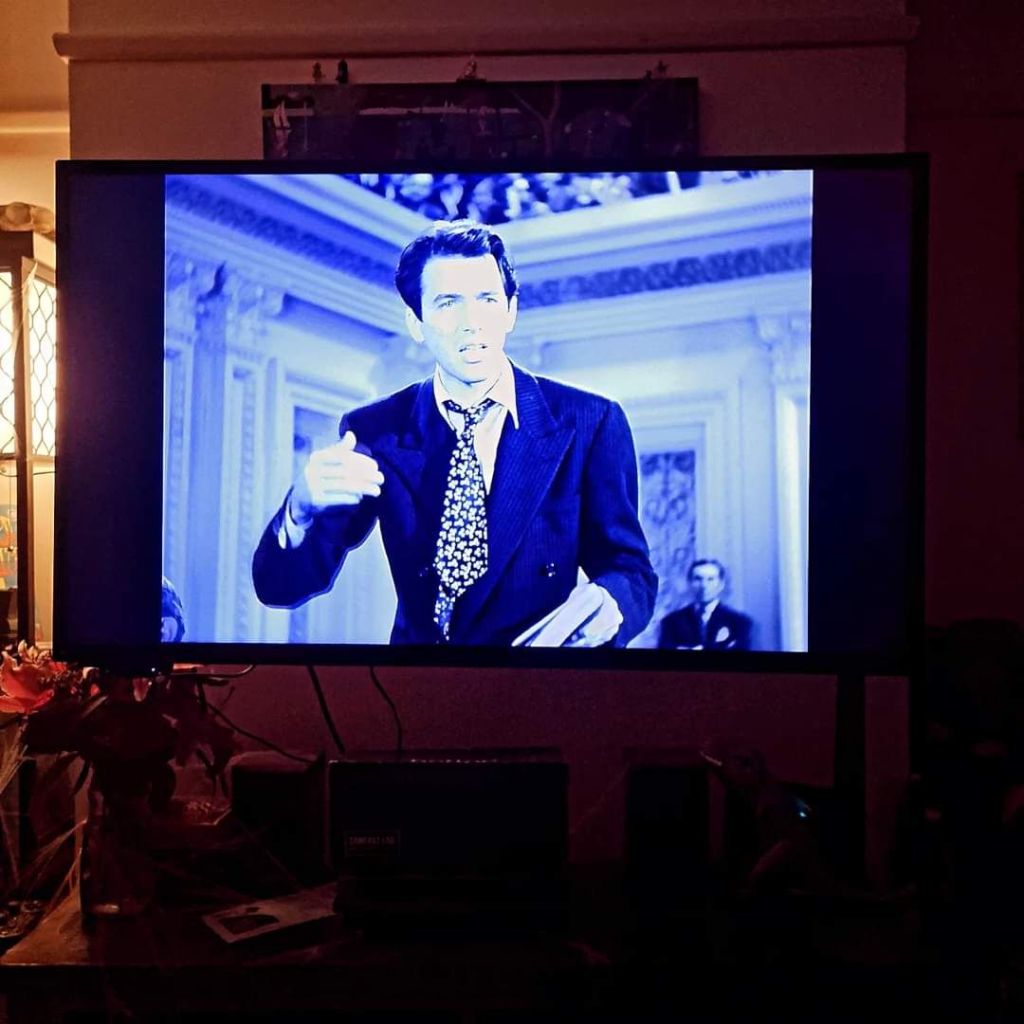
We’ve been on a Jimmy Stewart fix in this house recently, watching Rear Window, The Man Who Shot Liberty Valance, Winchester ’73, Destry Rides Again (one of his best in my opinion), tonight’s film: Mr Smith Goes to Washington, and soon, as with every Christmas, It’s A Wonderful Life.
He had a certain way with him, in his mannerisms, and the way he spoke, and his comedic intuitions. He was a funny actor. I would love to have written a film for him. I wonder if there’s a modern actor like him out there somewhere? I mean, I haven’t made a single film yet, but if you’re going to fantasise about a future career in filmmaking you might as well make it unbelievable. Anybody got a time machine I can borrow?
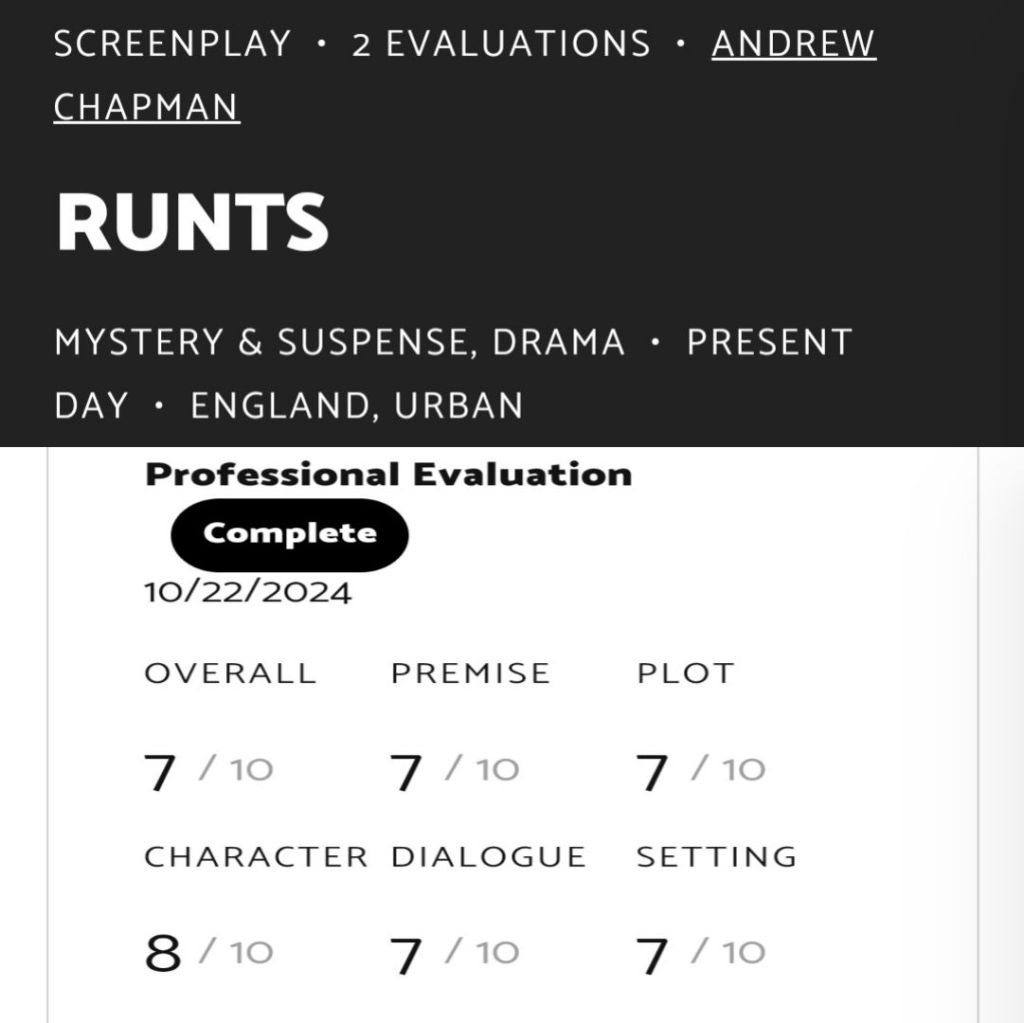
This has made my day! I just got a really excellent evaluation on The Black List for a screenplay I wrote called Runts. (I’ve shared the final part of the evaluation in the second image). A previous evaluation described the script as being “stunningly executed”.
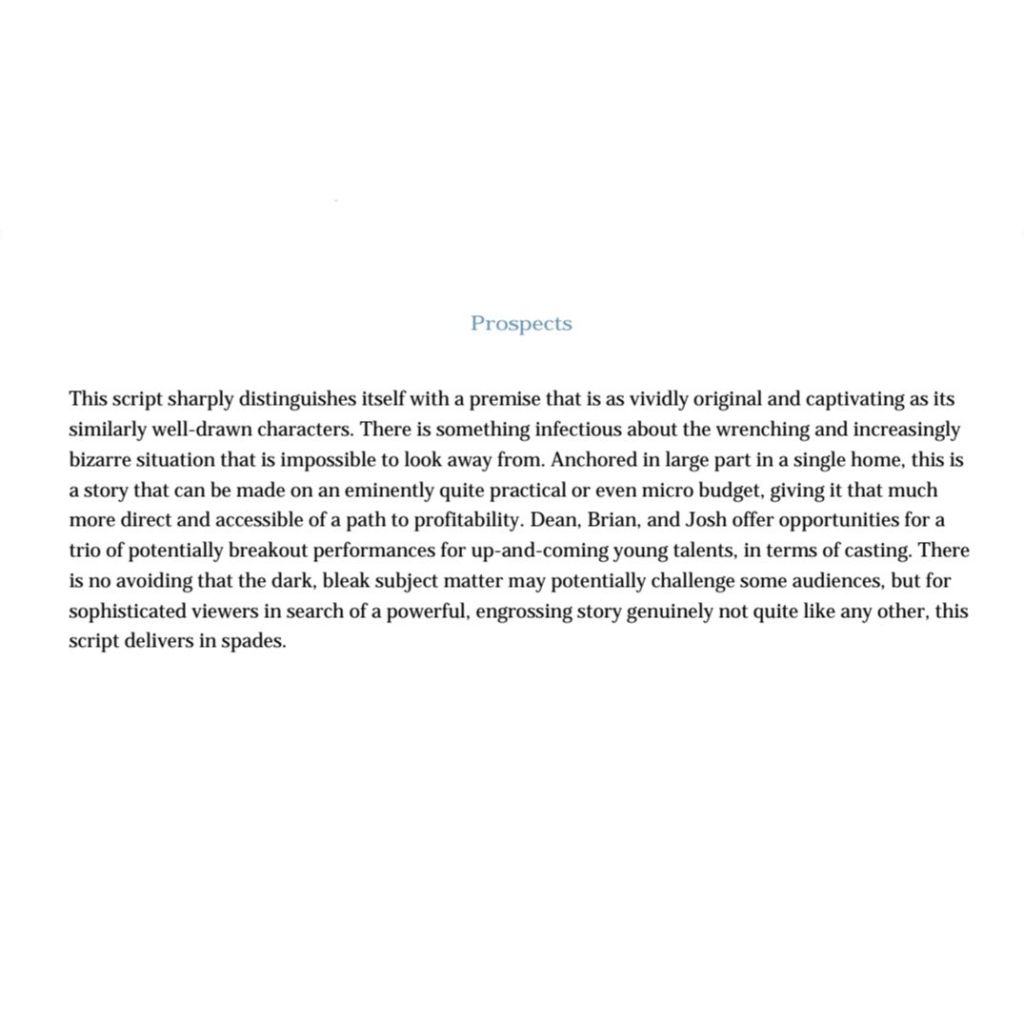
The crazy thing is, I wasn’t sure about this one. I abandoned it a few years ago, convincing myself it wasn’t good enough. And then Rachel read it a few months ago and told me I was crazy, it’s great! (Her words). And convinced me to revisit the story and get it out there. Now I kinda love it.
Link to The Black List page: https://blcklst.com/dashboard/projects/149594
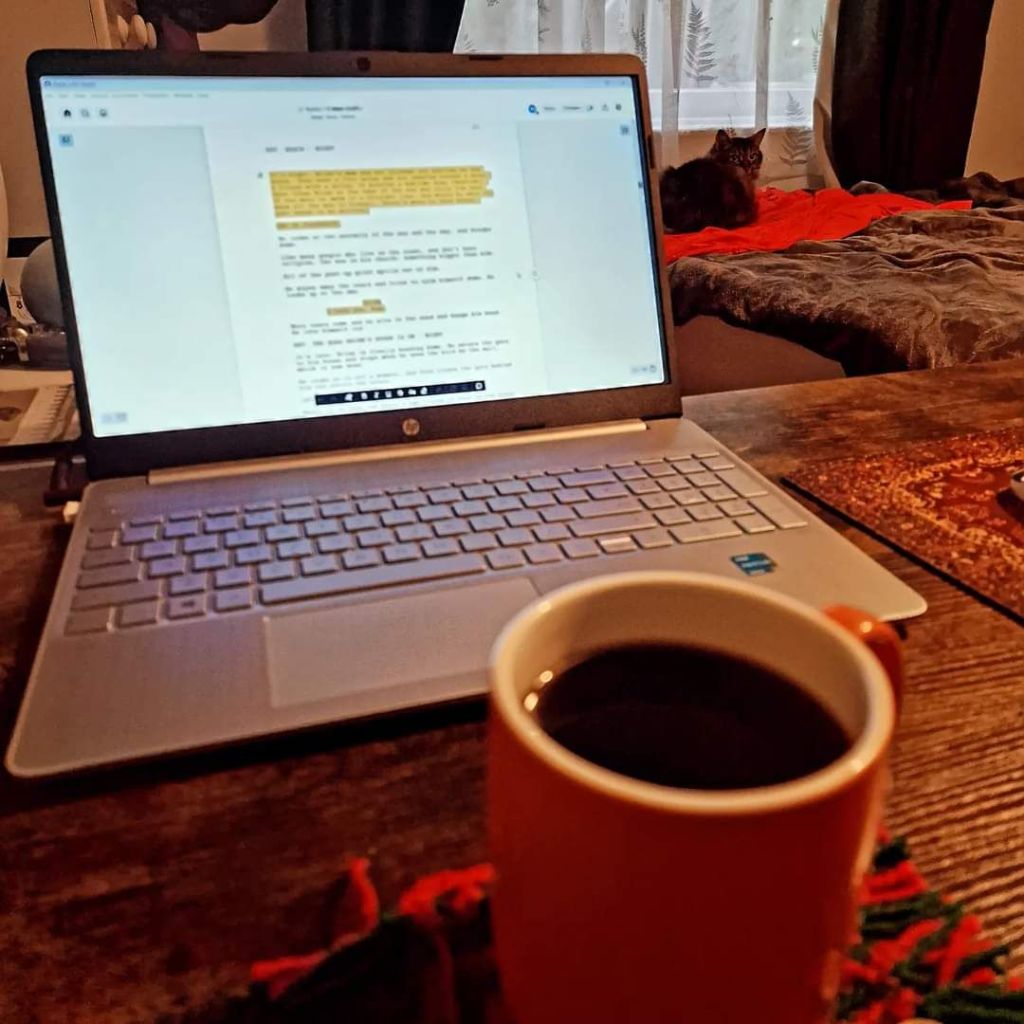
While I was between jobs, about a year and a half ago, I wrote a feature-length script in four weeks. This week, I read it for the first time since then. It’s a hell of a lot better than I remember. It needs a couple of new scenes and a slightly different ending, but I’ve got that all figured out, and I’m on a mission to finish it today.
The next step for this script is the almost impossible step. It requires luck, an incredible amount of random chance, and not much else. Somewhere out there is a director who is looking for something exactly like this, and our paths have to cross at just the right time.
RUNTS. A council house in the south of England. Night. Two young brothers bury their dead mother in the garden.
So begins a story of two boys, Brian, aged 11, and Dean, 16, as they learn to fend for themselves while keeping this dark secret. Things spiral out of control, and Brian begins to realise that there is something very, very, wrong with his older brother.
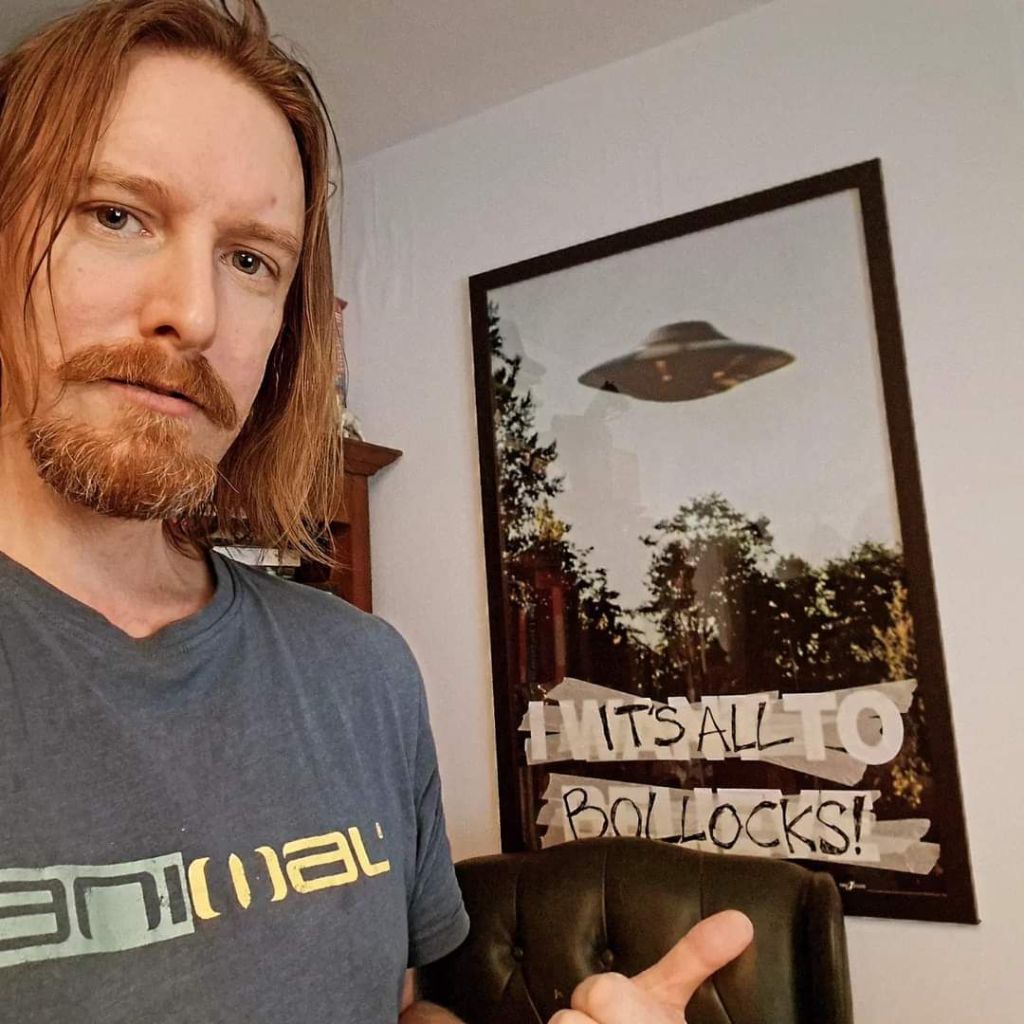
I’m currently writing a pilot episode for a tv show (an original idea that nobody knows about yet), and I needed to get more inside the head of the main character than I was. He is Fletcher Madoc, an internationally renowned sceptic and debunker of conspiracy theories and myths.
On the wall of Fletcher’s office is the iconic poster from Fox Mulder’s office in the X-Files, but he has covered the words I WANT TO BELIEVE with the words IT’S ALL BOLLOCKS.
Trying to make fictional people feel real is an important and tricky thing to get right. I highly recommend bringing their reality into your own.
Sometimes writing is just hard. Every word is like hefting a lump of marble onto the page. For me, the rewrite is my enemy. What’s the hardest part of writing for you?
Transcript-
I am embarking on a writing project (a screenplay) that is going to require a lot of research. Luckily for me that research mostly involves watching a whole bunch of old movies. And I’m talking b-movie schlock horror. Mad scientists, monsters, screaming girls, crumbling castles, fog, lightning, all that good stuff. As I’m watching them I figured I might as well share some of the great old movies with you, starting with The Black Sleep from 1956.
It was released in America as a double feature alongside The Creeping Unknown which, if you live in the UK, you might not have heard of. Over here it was called The Quatermass Xperiment.
The Black Sleep was so scary to audiences back in 1956 that the parents of Stewart Cohen tried to sue United Artists and the Lake Theatre for negligence after their nine year-old son died of fright. He was so afraid that he ruptured an artery.
Written by John C. Higgins, (who also wrote a film called Robinson Crusoe on Mars starring Adam West, which I’ve only discovered in writing this introduction and is going straight to the top of my to-watch list), The Black Sleep is about a mad scientist who is trying to cure his wife’s brain tumour by experimenting with people’s brains.
It stars Basil Rathbone as Dr Joel Cadman, the mad scientist of the movie. The quality of the movie is heightened by two supporting cast members, legends of Universal Monster movies; Lon Chaney Jr. and Bela Lugosi.
Dr Gordon Ramsey, played by Herbert Rudley, is in prison the night before he is due to be hung for murder when he gets a visit from his old mentor, Dr Cadman. Cadman tells Ramsey that he believes he is innocent but is unable to help. He offers Ramsey a sedative to make the hanging easier. This is a lie. The powder he pours into Ramsey’s drink is an East Indian drug known as The Black Sleep which induces a deathlike state of anaesthesia.
Ramsey is pronounced dead in his cell and so avoids the noose. The body is turned over to Cadman. When safely inside Cadman’s abbey home, Ramsey is revived. Cadman explains that he needs Ramsey’s talents to help him revive his wife, who is in a coma due to a deep-seated brain tumour.
They get to work on examining the brain of a corpse. Ramsey learns that the “corpse” they had experimented on was alive and was now being kept in a basement dungeon where more living victims of Dr Cadman’s experiments were being kept, including Curry; the very man Ramsey had been accused of murdering.
Curry is played by Tor Johnson who you might recognise as the big guy from the infamous Ed Wood movie, Plan 9 from Outer Space.
Lon Chaney Jr. plays Mungo, who walks with a dragging leg and torments Laurie Monroe (played by Patricia Blair). It turns out that Mungo is her father, Dr Monroe. He was a lecturer at the medical college who suffered a brain disease that Cadman said he could cure. Instead, his experiments turn him into a mindless leg-dragging monster.
The Black sleep was Bela Lugosi’s last movie (unless you count Plan 9 from Outer Space, which he was in but died before the film went into production. They used test footage of Lugosi in the finished film).
Lugosi plays Casimir, a mute servant. I loved him in this film. He has so much presence in every film he’s in and I’m always pleased when he pops up.
During production Lugosi was unhappy that his character didn’t have any lines so, to pacify him, the director, Reginald Le Borg, filmed some dialogue scenes with the actor and then just didn’t put them in the movie.
The film is great. They really put the effort in to make it creepy and atmospheric. They even got a real neurosurgeon in for the close-ups of the brain surgery to make it more believable.
I’m working on a screenplay that will be a homage to the old b-movies of the 40s and 50s. I love these old films and I think more people should go out there and rediscover them. The Black Sleep is available to watch on Amazon Prime and so are many other classics (including The Quatermass Xperiment, which is also great).
Yes, coddiwompling is a word, and I’m bringing it back.
If you are looking for tips to improve your writing you will find them here. But you will also discover that doing whatever the hell you want can work just as well too.
Gertrude Stein, the famous American novelist, poet, and playwright said –
Punctuation is necessary only for the feeble minded.
Before we venture into the spiralling madness of authors who go against the rules, I just discovered that the word “playwright” is written P L A Y W R I G H T . I assumed it would be spelled P L A Y W R I T E . Like someone who writes plays. Playwrite. This might be because I am a fool. It might also be because the English language is endlessly surprising. Etymologically speaking Playwright is similar to wheelwright. A wheelwright was someone who wrought wheels out of wood and iron. And so a playwright is someone who has wrought words into a dramatic form. Like the words have been hammered and bent into submission.
But this isn’t about playwrights. This is about rules god damn it, so let’s get to it.
There are hundreds of books about the rules of writing correctly. As authors we walk a tightrope of good grammar. At any moment we could fall into a pit of dangling participles, passive sentences, repetition, the much feared adverb that reveals the writers inability to show instead of tell, repetition, a misplaced comma, and god forbid; a rogue semi colon. And worst of all, repetition.
But how important are these rules and how much are they going to actually hinder your success?
Only ever use he said or she said, and never follow it up with an adverb.
You don’t even need to use he asked, or she replied. He said is a tag to notify the reader who has spoken. They become invisible to the reader. We scan over them as we read.
Of course you can say, said Graham, or Susan said, but be warned; only do that if you have characters named Graham or Susan. If not, I would recommend using the names of your own characters. The key here is economy of words, and clarity. The reader wants to know who is speaking but nothing more. All the dramatic work should be done in the dialogue or the surrounding prose.
You might have a character at the breakfast table. His wife has prepared breakfast for him. And we get the following piece of dialogue. “I wanted my eggs runny, not raw,” said Graham, angrily.
Instead of using the word angrily, you would write something like, “I wanted my eggs runny, not raw,” said Graham, picking up his plate and throwing it at Susan.
You see, we have a vivid image, instead of “angrily”. There is no doubt that replacing the adverb is better.
Unless of course, you are one of the bestselling authors of all time.
Stephen King said about J. K. Rowling –
Ms Rowling seems to have never met an adverb she didn’t like.
It’s true. Her prose is littered with them.
I’m a sucker for this rule and I try to never use adverbs. But maybe I shouldn’t be afraid of throwing a few in every now and then. It hasn’t exactly hindered the success of Harry Potter.
Avoid them. If you have more than three exclamation marks in your entire novel you have too many. It is lazy. It doing work that should be self-evident in the words being spoken, or the events that are unfolding. If you need to add a nudge at the end of sentence to let the reader know that THIS BIT IS REALLY SURPRISING then something is wrong.
Your words should speak for themselves without the fanfare to highlight how loud someone is shouting or that an explosion is really big. And just on an aesthetic level it makes the page look cluttered and messy.
Having said that, in Joe Hill’s hugely successful book, NOS4A2, there is an exclamation mark every time Charlie Manx, the bad guy in the story, speaks.
You will also find an excessive use of exclamation marks in the books of Tom Wolfe, F Scott Fitzgerald, Jane Austin, and of course the biggest offender of all, James Joyce.
Some people think of those authors as being amongst the best literary writers in history. So maybe using more than three in a book won’t be so bad.
Here’s a curious one; when writing dialogue should you use the double quotation mark or the single one? That has a straightforward answer.
The publishing standard in the UK is to use a single quotation mark. And in the US, they use the double quotation mark.
Unless of course you’re the bestselling author Roddy Doyle, who uses neither. He just starts each piece of dialogue with a dash.
Cormac McCarthy, author of No Country for Old Men, and The Road, didn’t believe in speech marks either, saying –
I believe in periods, in capitals, in the occasional comma, and that’s it.
On the subject of basic punctuation, in the last twenty-four thousand words of James Joyce’s Ulysses there are only two full stops and one comma.
So what’s the point of all this? Well, simply, there is no right or wrong way to write well. You can do whatever the hell you like. The books that break through and become huge bestsellers are littered with broken rules. Nobody in the publishing industry can predict what makes a book become a bestseller. Writers have tried to hone their craft with best practices but, ultimately it’s for nothing.
My advice is that you should learn and understand all these things and then use them at your discretion. Be free to write the way you want to write.
Maybe you don’t need to polish your prose into a smooth perfectly formed generic thriller. Let it be a bit rugged around the edges. Let a bit of your voice come through.
Writing is like music. You can release a highly produced pop song that does well in the charts, and you will do well. For me, those songs are polished so smooth I bounce right off.
Or you can be like Bob Dylan. Sometimes he would screw up a word while singing and just say the word again. He didn’t even go back and rerecord it. It’s right there in the song. He might screw up twenty seconds in and just start eh song again, and it’s right there in the album. It’s those cracks in the perfection that let us in. It’s true for all art, and it’s especially true for writing.
That’s all from me!
To get notifications for new videos from me click subscribe and ring that notification bell. New videos come out every Wednesday.
If you are an author and you have a mailing list why not pop a link to my channel in your next newsletter. And if you do please let me know and I will plug your book in a future episode.
 Andrew Chapman / Author and Screenwriter