Swearing in Literature

swear book

In Better Angels of Our Nature, Stephen Pinker says that swearing is a sign of a civilized society. You’re not going to be hung for comparing a member of the royal family to the back end of a donkey. We have progressed beyond that. There is no doubt that there is an offensive side to the English language but you are free to use it as you please. The question is; when should it be used, and when should it be avoided?

If you are writing a picture book for three year-olds it’s probably best that the talking squirrel doesn’t have speech bubbles filled with expletives. But that’s obvious to anyone so let’s focus on fiction aimed at adults. The reason this subject is on my mind is that I’m reaching the end of writing a horror/thriller novel and as the first rewrite looms I start to think about these things.

There is swearing in my book. It is occasional and mostly in the dialogue. I only paused for thought when I came to edit the moments where the fourteen year-old children in the book swear. To justify this I’m going to drag out two very important words; realism and context.

Fourteen year-olds swear. You might not hear them doing it, and not all of them do, but most, when amongst their peers, use “bad” language all of the time (in fact I’ve questioned my twelve year-old daughter on this and she has confirmed that many of her friends do indeed have potty mouths. She of course is an angel, or so she tells me). You can avoid it in your writing but sometimes avoiding it takes away from the realism of what you are writing. As I’m currently writing horror I’ll use horror as an example. Let’s say we have a fourteen year-old boy named Billy, and Billy has just witnessed the violent death of a parent. Is he more likely to mutter the word, “Gosh.” under his breath, or something more visceral? The word gosh would immediately destroy the believability of the scene. However, if you are writing a scene where Billy is enjoying a particularly good ice cream it would be unnecessary for him to comment on how f***ing delicious it was.

Here’s my dilemma, and the one that got me onto thinking about this in the first place; when is it okay to swear in prose, outside of dialogue? My thoughts on this are straight forward (but I have gone against my own advice a few times as I’ve looked at each individual case). If you take the swear word out no one is going to notice that it isn’t there, and so all should be eliminated. Whether or not swearing is okay in a civilised society there is no doubt that some people find it abhorrent. So take it out. People will happily read the murder scenes in your book and not flinch but as soon as they come across an F-word in the middle of a descriptive passage a big bell will ring in their head. Even if that ringing stops pretty quickly it is still jarring enough to drag you out of the scene.

So why have I left a few in? Sometimes your descriptive prose will reflect the thoughts of whichever character is in that scene, and that’s okay. It helps to clarify the mood your character is in. So you have a scene that goes – Terry stood on the side of the road looking at his smashed up car. The other driver, some drunk moron, was still sat in his driver’s seat, bleeding from the ears. Terry had two options, call a taxi and make it to the wedding on time, or help this stupid fucking drunk.

Alright, so that’s not a great example, but hopefully it illustrates my point well enough. Sometimes your prose reflects the thoughts, or the mood, of the main character in the scene.

swear keyboard

It’s interesting to me that there are no age guidelines with books, as there are with film and television. It is up to the responsibility of the author. But we’re not talking about sex and violence, we’re talking about language. You might lose some readers because they think your use of language is vulgar, but remember, that just makes you more civilised than them. Don’t swear for the sake of it though, the novelty wears off pretty quickly for the reader. So long as your portrayal of life is true then you won’t need to think too hard about whether or not that particular word is necessary.
Once Upon a Wine (How not to write a fairytale, by a bored and drunk writer)

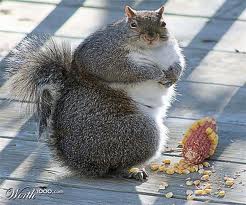
Fat-squirrel-2Once upon a time, is an overused trope. There are many established and recognised ways to tell a story. This is not one of them. There are accepted literary rules that must not be broken. Speaking directly to the reader is one such rule. You are embarking on an experiment. It might become tedious. Maybe it won’t. But before we start, here is a quick writing tip; you should never begin or end a sentence with the word “but”. But there we are.

This story is a fairytale about a drug addict. And it begins (also, you should never begin a sentence with the word “and”) in a magical forest just outside of Boscombe.

Boscombe was a magical (another thing you should never do is repeat the same word twice in near proximity, i.e. “magical”) place in the south of England. It is a small province in Bournemouth. Boscombe is famous for stabbings, alcoholics, a booming drug trade (they were lucky enough to have the first crack factory discovered in England!) and a happy-go-lucky 30 year-old pisshead called Trev.

Trev was enjoying a peaceful slumber under a sick-looking oak tree just down the path from that tatty little mini-golf course in Boscombe gardens.

“Urgh,” he moaned, stirring from a terrible hangover. He began to cry. Crying in your sleep is a talent one acquires after much practice and hardship.

A squirrel watched him from a branch above. He had a look of trepidation in his eyes. He sniffed the air and twitched his nose. Quietly, and slowly, he scurried down the tree and landed softly on the ground. He crept up to Trev and looked him over carefully. (By the way, if you are reading this and are a writer in the making please do not do as I do. I am making no attempts to avoid adjectives. Avoiding adjectives is very important).

The squirrel sniffed Trev’s nose and took a tentative nibble. “Could this mysterious thing under the tree be a giant nut?” the squirrel thought. Probably.

Trev was startled awake. His eyes opened wide. In his mad half asleep state he perceived the squirrel as some kind of small fury monster. He screamed. The squirrel panicked. Trev reacted without thinking and slammed his fist heavily down on the beast. He punched the poor thing into the ground. It lay still, sunken into the dirt. Blood seeping from its ear. It twitched and then vomited. (Jesus Christ. This is a horrible fairy tale. If you haven’t stopped reading by now there is something really very wrong with you).

It is said that every time the fourth wall is broken, and the writer addresses the reader directly, the illusion is destroyed and any kind of drama or suspense built up is shattered. If you decide to address the reader directly, in your own writing, you should make sure it pays off and has at least some relevance to the story. If you are writing in the first person it can be used as a way to give a quirky insight into the narrator’s mind but it is rarely done well and normally just pisses people off. What I’m doing now is just self-indulgent and awkward for both of us.

Trev pulled himself to his feet and brushed bits of twigs and dirt from his clothes. (A quick note about adjectives. I could have just said, “Tev stood up. His clothes were dirty.” But “dirty” is an adjective, and as I said earlier, they must be avoided. It’s all about showing and not telling, so they say. Building a picture for the mind’s internal cinema to follow).

Fuck. I can’t remember what this story was going to be about. Princesses maybe? Drug addled princesses. I don’t know. That will do. Fairy tales should have villains shouldn’t they? Yes!! (Exclamation marks, let’s talk about that. They should be used sparingly, and never more than one, ever). Right, let’s get a villain on to the scene.

A shadow fell over Trev, our prince. Trev looked up at the figure standing over him, shielding his eyes from the bright sun that was eclipsing around the figure, causing him to appear as a featureless silhouette.

“What the fuck do you want?”

The figure leaned forward revealing his identity. “Ello, ello, ello,” he said, stereotypically.

“Good morning Constable.”

“You just murdered that squirrel.”

“I want to marry your daughter.”

“Well, well, well,” said the constable (who had a recognisable trait of often repeating words three times just because the author doesn’t have the adequate skills to create a more distinct character and wants to avoid saying the words “he said” by letting the verbal tick do the work for him), “Doesn’t that add an interesting depth to our relationship. You’re nicked.”

Trev was taken to the police station and the author decided to wrap things up because this whole thing, whatever it is, is pointless and stupid.

The constable’s daughter beat her teenage fists on her dad’s manly chest and begged him to let Trev, her lover, go. He agreed and the teenage couple had sex resulting in an unwanted pregnancy. They got marriage even though they barely knew each other because Trev wanted to prove her dad wrong, and is a bit of a dick. They lived happily on benefits ever after.


The End


Epilogue.

The squirrel that Trev punched survived but due to an unusually warm winter, making it easier than usual to find food, got fat and was killed by a cat because he couldn’t get away quick enough.


10 Simple Steps to Getting Noticed on Wattpad

10 Simple Steps Cover

Step one

Write a book called, “10 Simple Steps to Getting Noticed on Wattpad.” (Like I did right here – https://www.wattpad.com/story/51458336 )

Step two

Use said book to give helpful information. Slyly mention your main book as an example. Just like I’m about to do in step three.

Step three

Have an excellent cover with a very funny sticker in the top right-hand corner (Here’s a good example of what I mean – https://www.wattpad.com/story/41481274-the-accidental-scoundrel )

Step four

Sell your soul. Here’s a helpful guide to get you started –

1) Put your book in a shoebox along with a lock of your own hair, some toenail clippings, and a picture of Hellen Mirren.

2) Go to the middle of a crossroads and bury the shoe box. (Depending on the type of road surface you may need a pneumatic drill and a fake stop sign, especially if you intend to do this at rush hour.)

3) Say the words, “Unbiwattpadio garnethme readerworms ignitio soulio.”

4) Wait.

5) Apologise to the traffic and go back home.

6) Consult a psychiatrist.

Step five

Consider packing the whole thing in.

Step six

Having consumed quite a lot of whisky remember how brilliant a writer you really are and get straight back on to Wattpad.

Step seven

Endlessly follow other authors and pretend to like their books so they will pretend to like yours in return.

Step eight

Wonder where exactly this staircase is leading to. Do you have an attic? Look back at the previous seven steps and try and remember exactly what it was you came up here for in the first place.

Step nine

Lean against metaphorical banister and call psychiatrist and say you’re having a metaphysical meltdown and could he please recommend alcohol as you think it would do a lot better than any time spent on a chaise longue. Remember that “chaise longue” is French for “long chair” and chuckle at how unsophisticated that particular piece of furniture now seems.

Step ten

Put your finger in your ear and wiggle it up and down. No really, try it. Doing it? It sounds just like Pac-Man doesn’t it?

Step eleven (damn, I’ve miscounted somehow)

I don’t know how to get noticed on Wattpad. It’s really hard, man. I’ve been on here for like 4 months and I’ve only got one vote. You are really asking the wrong person.

Thank you for reading. Now, go and read The Accidental Scoundrel and, if it makes you laugh, do please vote for it.

Oh, and – Step Twelve

Never directly ask for votes.