Ignore me. I’m sick.

What is this art form? This theatre of words moving across a page? The trade of building images out of symbols? Carving literary statues with grammatical chisels? Writing is so much and so little. A bad sentence is almost indistinguishable from a good one. It takes a person with a degree to know what is good and what is not. They will tell you Dan Brown paints his words with turds and shake their fists at the pages of The Bookseller magazine which dares to print sales figures that contradict their assessment.

The average reader has no idea. Nor do they care.

You can have a novel, 120,000 words long, and find nothing of meaning within its pages. Heroes running the same course as many before them. A save-the-cat journey of write-by-numbers plots designed to move and thrill. The same story sold bought and read again and again and again.

Another book. Which follows no particular pattern. Does not follow the rules of grammar exactly. And does not dance around a story circle. Filled with depth and aphorisms and wit. Is never read.

If a genre book is considered literary is it no longer genre? If a literary book is blandly written is it still art? Is storytelling itself art, regardless of the prominence or not of adjectives in its prose?

I always wanted to write whatever the British equivalent of The Great American Novel is. In wanting to learn how to do this I have become more and more interested in turning a collection of words on a page into a continuous moving image in the reader’s mind. I write westerns now. The goal of the books is not to blow you away with a skilful display of my vocabulary and the wrangling of obscure and rarefied words, but to put the words out of your mind entirely. I want my stories to grab you by the hair and drag you through the dirt. I want you to read them in one sitting and turn that last page with your heart racing and your eyes raw with fatigue and belly hungry. But instead of eating, or sleeping, I want you to turn right back to the start and read it again. Is that art?

To do that, maybe I have not created art. I have created entertainment.
Will that do? Is that enough?
I still want to write The Great British Novel, but writing pulp is too much fun.

Right now I am sick. I’m sat on the couch amidst a snowstorm of crumpled tissue. My nose is red. I’m sniffling. I have a tickle at the back of my throat that I have been refusing to turn into a cough since I started writing this incoherent nonsense. I should be writing the next chapter in my book but instead I am rambling about, what? Whether or not writing is art? I have no idea. I have lost the thread of my original thought. The cold that has turned my brain into a red hot storm of snot has forced my imagination into some kind of fevered spasm of bollocks.

I have the urge to write but not the clarity to do so usefully. So now I have done this. I started writing with no plan and have ended up here, and you’re right here with me, wondering what the point of any of this is.
We are conjoined in an existential crises of blog gibberish. I will set you free so I can go and sneeze.

Let me leave you then. I am going to drink coffee, cough up some lung-butter (as Rachel so juicily calls it), take some Sudafed, and try again to write what I opened my laptop to write in the first place. Some good old fashioned gun-slinging pulp fiction.
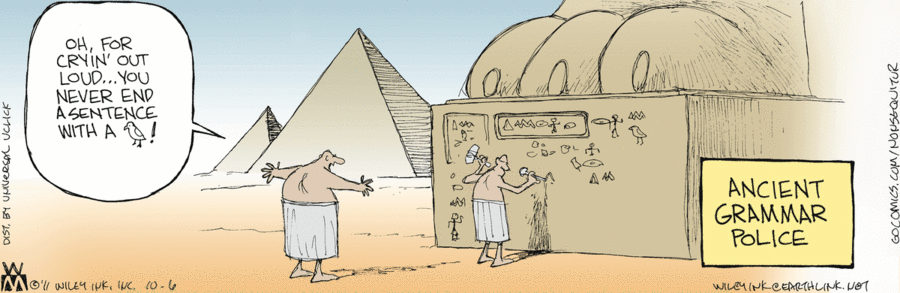
And should not be at the beginning of this sentence.

StrunkAndPtah

I don’t know what the key to this whole writing thing is. I’ve spent the last fifteen years trying to find out. I must have read fifty books on the subject. I think maybe its clarity. So much writing is just filler, or confusing sentence structures.

It becomes a kind of music. I know I break some grammatical standards but hopefully not in a way that jars. There is no sensible reason for a sentence to not start with and. Or begin with or. Here is some dialogue between two students whispering to each other in an English lesson –

“Why can’t a sentence start with and?”

“Because she said so. And maybe she’s right. Fuck it. I don’t know. And anyway, that’s not how we speak so why write like that?”

“But what if we lose marks by writing realistically.”

“You shouldn’t start a sentence with but,” says the Teacher, overhearing the conversation.

“Why?” says the boy.

“Because that is the rule.”

“You shouldn’t start a sentence with because,” says the boy, “It’s a subordinate conjunction that requires more than one clause.”

“I’m glad you’ve been paying attention,” says the teacher, “but my first clause was in the sentence you interrupted when I said; ‘You shouldn’t start a sentence with but’.”

“This is all very confusing,” says a drunk man stumbling into the classroom by accident.

“Can I help you sir?” says the teacher.

“None of this is real,” says the drunk.

Why did I write that in the present tense? The second most difficult tense for a reader after the second tense. I’ve never written in the second tense before. I think I’ll give it a go;

               You walk into the gents at the pub. A man by the urinal is touching   himself inappropriately. You enter the cubical with the broken lock. You drunkenly undo your trousers and let them fall to the ground. You sit down and pee. You would have pissed at the urinal if it wasn’t for that masturbating man. Why did you sit down anyway? Too drunk to stand. You focus on a round convex lens on the back of the cubical door and think to yourself, why is there a camera in here? And decide it’s time to stop drinking in this particular watering hole.

Good. That was fun. You know, as these blog posts get further down the page the empty beer can count on my desk gets greater. It’s no wonder I lose focus.

Once Upon a Wine (How not to write a fairytale, by a bored and drunk writer)

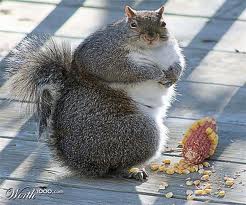
Fat-squirrel-2Once upon a time, is an overused trope. There are many established and recognised ways to tell a story. This is not one of them. There are accepted literary rules that must not be broken. Speaking directly to the reader is one such rule. You are embarking on an experiment. It might become tedious. Maybe it won’t. But before we start, here is a quick writing tip; you should never begin or end a sentence with the word “but”. But there we are.

This story is a fairytale about a drug addict. And it begins (also, you should never begin a sentence with the word “and”) in a magical forest just outside of Boscombe.

Boscombe was a magical (another thing you should never do is repeat the same word twice in near proximity, i.e. “magical”) place in the south of England. It is a small province in Bournemouth. Boscombe is famous for stabbings, alcoholics, a booming drug trade (they were lucky enough to have the first crack factory discovered in England!) and a happy-go-lucky 30 year-old pisshead called Trev.

Trev was enjoying a peaceful slumber under a sick-looking oak tree just down the path from that tatty little mini-golf course in Boscombe gardens.

“Urgh,” he moaned, stirring from a terrible hangover. He began to cry. Crying in your sleep is a talent one acquires after much practice and hardship.

A squirrel watched him from a branch above. He had a look of trepidation in his eyes. He sniffed the air and twitched his nose. Quietly, and slowly, he scurried down the tree and landed softly on the ground. He crept up to Trev and looked him over carefully. (By the way, if you are reading this and are a writer in the making please do not do as I do. I am making no attempts to avoid adjectives. Avoiding adjectives is very important).

The squirrel sniffed Trev’s nose and took a tentative nibble. “Could this mysterious thing under the tree be a giant nut?” the squirrel thought. Probably.

Trev was startled awake. His eyes opened wide. In his mad half asleep state he perceived the squirrel as some kind of small fury monster. He screamed. The squirrel panicked. Trev reacted without thinking and slammed his fist heavily down on the beast. He punched the poor thing into the ground. It lay still, sunken into the dirt. Blood seeping from its ear. It twitched and then vomited. (Jesus Christ. This is a horrible fairy tale. If you haven’t stopped reading by now there is something really very wrong with you).

It is said that every time the fourth wall is broken, and the writer addresses the reader directly, the illusion is destroyed and any kind of drama or suspense built up is shattered. If you decide to address the reader directly, in your own writing, you should make sure it pays off and has at least some relevance to the story. If you are writing in the first person it can be used as a way to give a quirky insight into the narrator’s mind but it is rarely done well and normally just pisses people off. What I’m doing now is just self-indulgent and awkward for both of us.

Trev pulled himself to his feet and brushed bits of twigs and dirt from his clothes. (A quick note about adjectives. I could have just said, “Tev stood up. His clothes were dirty.” But “dirty” is an adjective, and as I said earlier, they must be avoided. It’s all about showing and not telling, so they say. Building a picture for the mind’s internal cinema to follow).

Fuck. I can’t remember what this story was going to be about. Princesses maybe? Drug addled princesses. I don’t know. That will do. Fairy tales should have villains shouldn’t they? Yes!! (Exclamation marks, let’s talk about that. They should be used sparingly, and never more than one, ever). Right, let’s get a villain on to the scene.

A shadow fell over Trev, our prince. Trev looked up at the figure standing over him, shielding his eyes from the bright sun that was eclipsing around the figure, causing him to appear as a featureless silhouette.

“What the fuck do you want?”

The figure leaned forward revealing his identity. “Ello, ello, ello,” he said, stereotypically.

“Good morning Constable.”

“You just murdered that squirrel.”

“I want to marry your daughter.”

“Well, well, well,” said the constable (who had a recognisable trait of often repeating words three times just because the author doesn’t have the adequate skills to create a more distinct character and wants to avoid saying the words “he said” by letting the verbal tick do the work for him), “Doesn’t that add an interesting depth to our relationship. You’re nicked.”

Trev was taken to the police station and the author decided to wrap things up because this whole thing, whatever it is, is pointless and stupid.

The constable’s daughter beat her teenage fists on her dad’s manly chest and begged him to let Trev, her lover, go. He agreed and the teenage couple had sex resulting in an unwanted pregnancy. They got marriage even though they barely knew each other because Trev wanted to prove her dad wrong, and is a bit of a dick. They lived happily on benefits ever after.


The End


Epilogue.

The squirrel that Trev punched survived but due to an unusually warm winter, making it easier than usual to find food, got fat and was killed by a cat because he couldn’t get away quick enough.